Most of the coverage of shrinking certificate lifetimes is written as a warning about 2029. That framing is five months out of date. The first step already happened: since March 15, 2026, publicly trusted TLS certificates have been capped at 200 days. If your renewal process still assumes an annual cadence, it is already wrong.
The Schedule
CA/Browser Forum ballot SC-081v3 passed in April 2025 and set out a staged reduction rather than a single cliff:
before 2026-03-15    398 days
from   2026-03-15    200 days     <- in force now
from   2027-03-15    100 days
from   2029-03-15     47 days
Domain validation data reuse shrinks alongside it, from 398 days down to 10 days for SAN validation by the 2029 milestone. That second number gets less attention and matters more for anyone with a manual approval step, because it means the validation itself stops being something you do once a year and file away.
The values are deliberately awkward. 200, 100, and 47 are not round, and the reasoning is that a number you cannot map onto "twice a year" or "once a quarter" discourages anyone from building a manual calendar reminder around it. Whether that works as intended, it does communicate the intent clearly enough.
What Actually Breaks
ACME-managed web servers are fine. If nginx or Apache is fronted by certbot or an equivalent, the cadence change is invisible. The breakage is concentrated in the places nobody automated, and in my experience it is the same short list every time.
Appliances with no ACME client. Load balancer management interfaces, older firewalls, IPMI and out-of-band controllers, storage arrays, VPN concentrators. Many of these accept a certificate only through a web form. Some accept only a specific bundle format. At 398 days that was an annual annoyance somebody remembered. At 100 days it is quarterly, and at 47 days it is not survivable by hand.
Non-HTTPS services. Mail is the big one, because a mail server presents a certificate on SMTP, submission, IMAP, and POP3, and renewing the web certificate does nothing for any of them unless something copies the file and reloads the daemon. The reload is the step people forget. A renewed certificate sitting on disk while the running process holds the old one in memory is an outage waiting for the expiry date.
Pinned certificates and manually distributed trust. Anything where a partner has your specific certificate configured on their end now needs that coordination three to seven times a year instead of once.
What to Do About It
Inventory first. You cannot automate endpoints you do not know about, and every environment I have looked at has certificates nobody remembered issuing. Scan your own address space by port rather than trusting a spreadsheet.
Automate what can be automated, then deal honestly with what cannot. For the appliance that genuinely has no API, the answer is a documented runbook with an owner and a calendar entry, not an intention. Write down who renews it, how, and what breaks if they do not.
Then monitor the endpoint rather than the issuance. This is the part people skip. Certificate management tools tell you what they issued, and they cannot tell you what a client actually receives, which is where incomplete chains, stale files, and un-reloaded daemons live. A quick manual check of what a server is presenting:
openssl s_client -connect mail.example.com:465 -servername mail.example.com </dev/null 2>/dev/null \
    | openssl x509 -noout -subject -dates
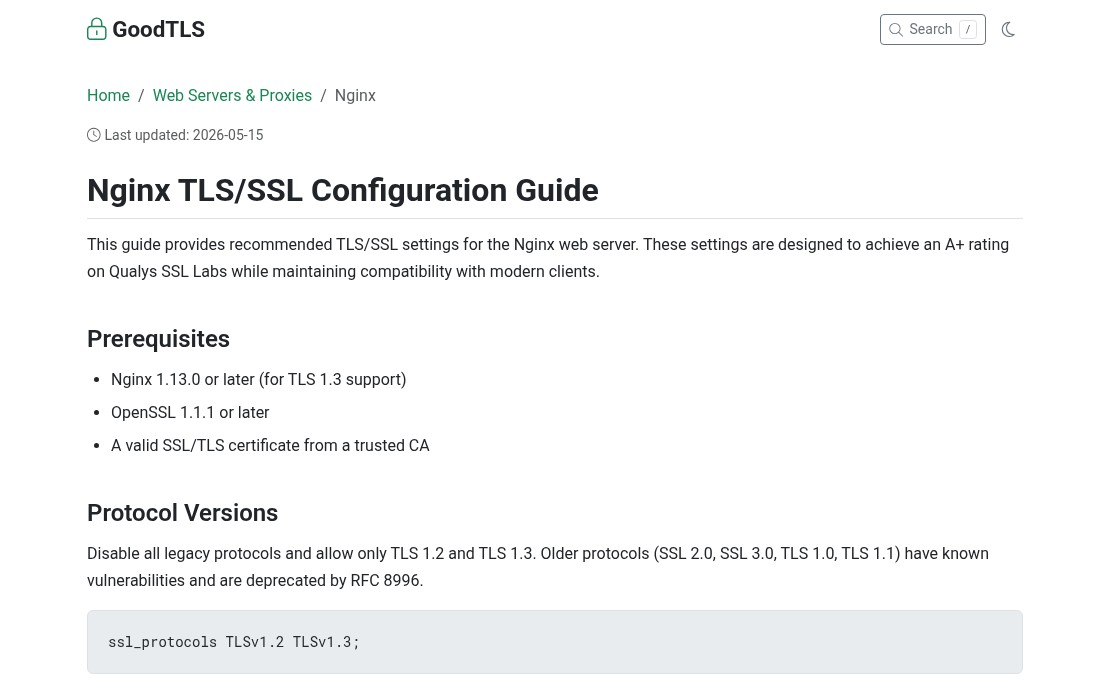
For a one-off look at a public endpoint, including the chain, the SSL check on mrdns.com does the same thing without the command line. For getting the underlying configuration right on whatever you are running, goodtls.com has per-application guides, including the mail servers and databases that tend to be the ones running on expired certificates.
The one thing I would push back on is treating 2029 as the deadline. March 2027 is the milestone that hurts, because 100 days is where quarterly manual renewal stops being merely tedious and starts producing outages. That is seven months away.